Address
304 North Cardinal
St. Dorchester Center, MA 02124
Work Hours
Monday to Friday: 7AM - 7PM
Weekend: 10AM - 5PM
Address
304 North Cardinal
St. Dorchester Center, MA 02124
Work Hours
Monday to Friday: 7AM - 7PM
Weekend: 10AM - 5PM
Learn how to build a Japandi color palette that feels calm, warm, and intentional — with 6 foolproof neutral combinations and exact hex codes you can copy for any room.
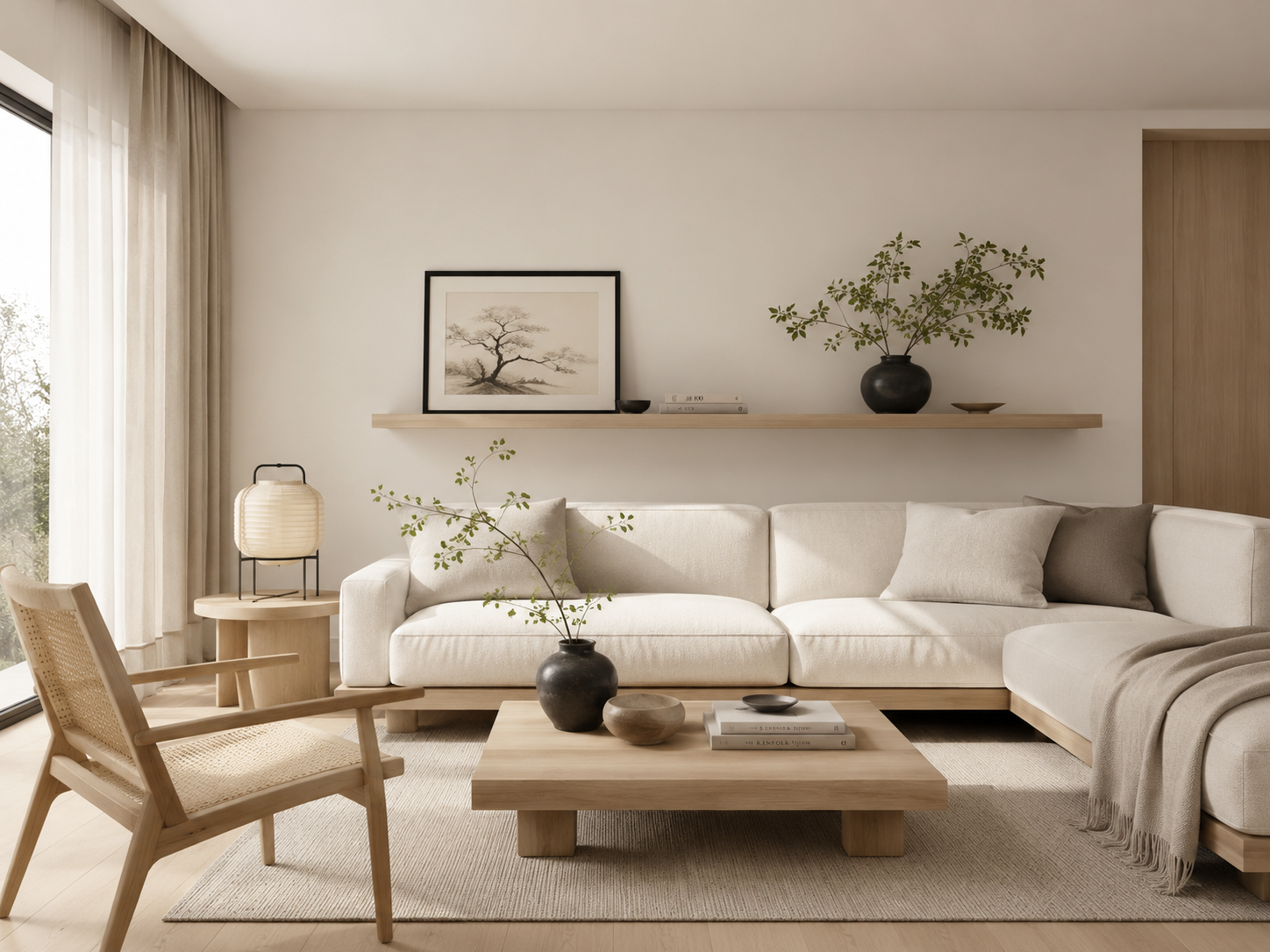
A Japandi room lives or dies by its palette — get the colors right and the linen, ceramics, and oak all fall into place. Use the four-role formula below, then copy one of the six combinations (hex codes included).
Keep your whole scheme to three to five colors built from these four roles:
| Role | What it is | Where it goes |
|---|---|---|
| Base | Warm off-white | Walls & largest surfaces |
| Secondary | Greige / oatmeal / taupe | Sofa, rug, curtains, bedding |
| Grounding | Walnut / espresso / soft black | Wood furniture, frames, anchors |
| Accent | Muted sage / clay / ochre | One cushion, vase, or stem |
The golden rule: warm undertones throughout, matte over glossy, and one accent at most.
The most versatile Japandi scheme and the safest place to start — layers of warm neutrals, grounded by rich walnut and a soft-black anchor for depth.
| Role | Color | HEX |
|---|---|---|
| Base | Warm White | #F5F1EA |
| Secondary | Oatmeal | #E7DECF |
| Tertiary | Greige | #C9BFB0 |
| Grounding | Walnut | #5B4636 |
| Accent | Soft Black | #2B2724 |
Best for: a whole-home base — living rooms and open-plan spaces.
A gently botanical take, with a dusty green and a warm clay working together as soft, earthy accents that bring the outdoors in.
| Role | Color | HEX |
|---|---|---|
| Base | Off-White | #F3EFE7 |
| Secondary | Soft Sage | #A7AE9E |
| Accent | Warm Clay | #B08968 |
| Grounding | Charcoal | #3A3A38 |
Best for: kitchens, studies, and plant-filled rooms.
The most Scandinavian-leaning option, kept from turning chilly by the warmth of blonde wood against a soft mushroom grey.
| Role | Color | HEX |
|---|---|---|
| Base | Warm White | #F4F1EC |
| Secondary | Mushroom Grey | #B8B2A7 |
| Wood | Blonde Wood | #D8C3A5 |
| Grounding | Ink | #33312E |
Best for: small or north-facing rooms that need to feel brighter.
The coziest of the six, with a golden ochre accent that glows under warm light and an espresso base for grounding.
| Role | Color | HEX |
|---|---|---|
| Base | Cream | #F1E9DA |
| Secondary | Taupe | #BBA98F |
| Accent | Muted Ochre | #C69B5B |
| Grounding | Espresso | #4A3B2A |
Best for: bedrooms, reading corners, and autumn refreshes.
A higher-contrast, gallery-like scheme with a more modern edge — still soft, because the darks are charcoal rather than true black.
| Role | Color | HEX |
|---|---|---|
| Base | Paper White | #F6F4EF |
| Secondary | Stone | #CFC8BC |
| Grounding | Charcoal | #45433F |
| Anchor | Near-Black | #211F1C |
Best for: home offices and entryways.
The gentlest palette, with a barely-there dusty rose that reads as a warm neutral rather than pink, warmed further by walnut.
| Role | Color | HEX |
|---|---|---|
| Base | Warm White | #F5EFE9 |
| Secondary | Blush Greige | #D8C7BC |
| Accent | Dusty Rose | #C9A99A |
| Grounding | Walnut | #6B5344 |
Best for: bedrooms and nurseries.
Warm neutrals (off-white, oatmeal, greige, taupe), natural wood tones, one grounding dark (walnut, espresso, or soft black), and a single muted, earthy accent such as sage, clay, or ochre.
Warm-neutral overall. Japandi borrows Scandinavian lightness but keeps Japanese warmth, so undertones skew warm. A cool grey works only when balanced with plenty of wood.
Yes — sparingly, and preferably a soft or near-black. A few black accents (a frame, a lamp, a ceramic) add depth without feeling stark.
Three to five in total, including your neutrals. Fewer colors, repeated thoughtfully, is what creates the calm.
Save whichever palette fits your space, then build the room one honest, natural piece at a time.