Quick Guide to Curtain Alternatives
If your windows feel heavy, dated, or simply wrong for the room, curtain alternatives are worth a serious look. Blinds, honeycomb shades, roller shades and sheer panels each handle light, privacy and insulation differently — and they read very differently visually. Here is how the seven most common options compare, and which rooms each one actually suits.
| Option | Light control | Privacy | Insulation | Typical cost | Best for |
|---|---|---|---|---|---|
| Venetian / wood blinds | Excellent (tiltable) | High | Low | $$ | Living rooms, offices |
| Honeycomb (cellular) shades | Very good | High | Excellent | $$$ | Bedrooms, cold or hot rooms |
| Roller shades | Good (up or down) | Medium–high | Low–medium | $ | Kitchens, small windows |
| Sheer curtains | Soft diffusion only | Daytime only | Very low | $ | Bright rooms, layering |
| Roman shades | Good | High | Medium | $$$ | Dining rooms, bedrooms |
| Woven wood / bamboo shades | Filtered, dappled | Medium | Low | $$ | Sunrooms, natural interiors |
| Shutters | Excellent (tiltable) | Very high | Medium | $$$$ | Front-facing windows, long term |
1. Venetian and Wood Blinds
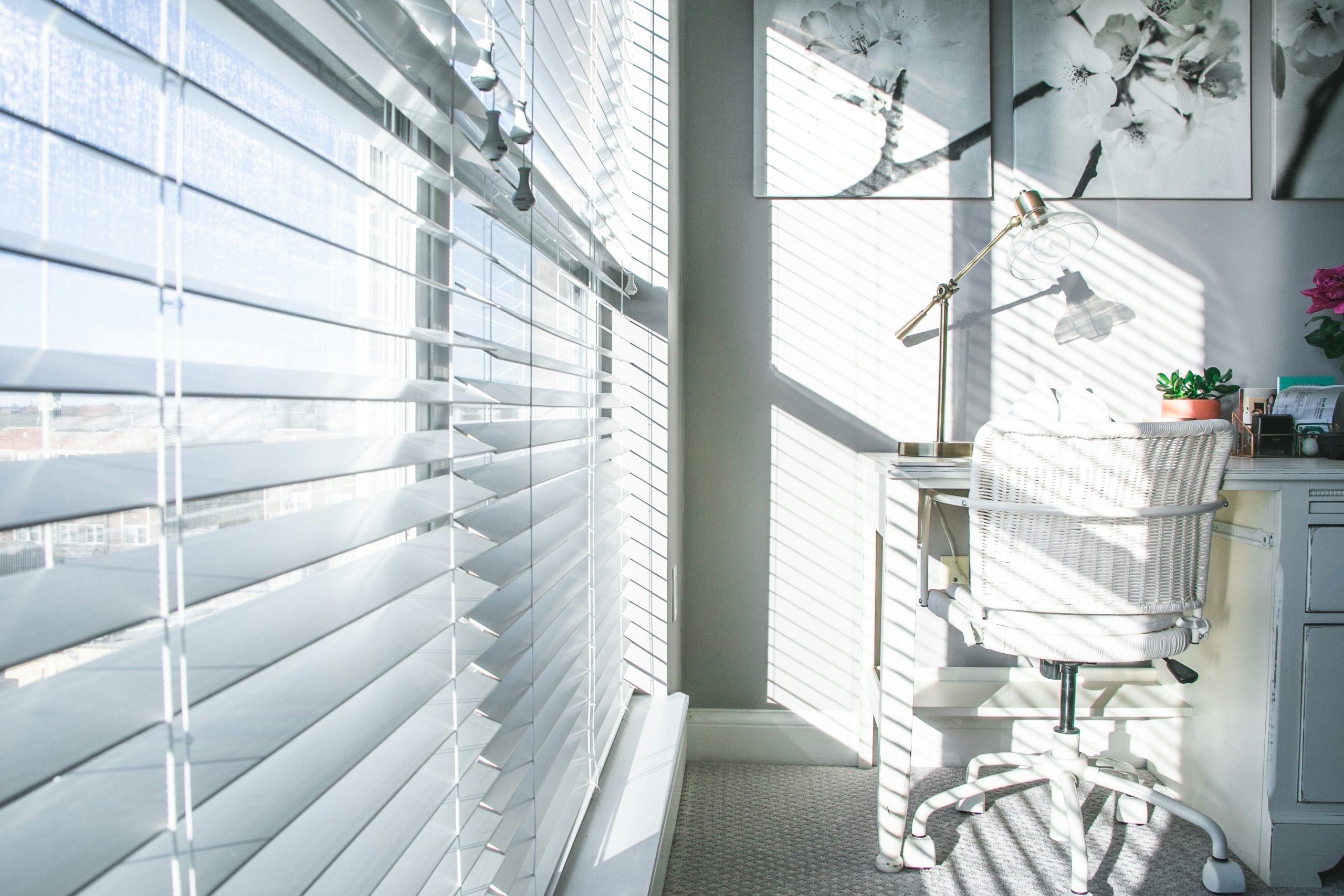
Horizontal slats you can tilt, raise and lower. This is the most precise light control of any window treatment: tilt the slats up to bounce daylight onto the ceiling, tilt them down for privacy without going dark. Aluminium slats read crisp and modern; real wood or faux wood reads warmer and heavier.
- Strengths: unmatched control over glare and sightlines, slim profile, works in almost any style.
- Weaknesses: slats collect dust and take time to clean; almost no thermal benefit; cords can be visually busy.
- Visual effect: horizontal lines make a narrow window look wider. Wood slats add texture that hard-edged rooms often need.
2. Honeycomb (Cellular) Shades
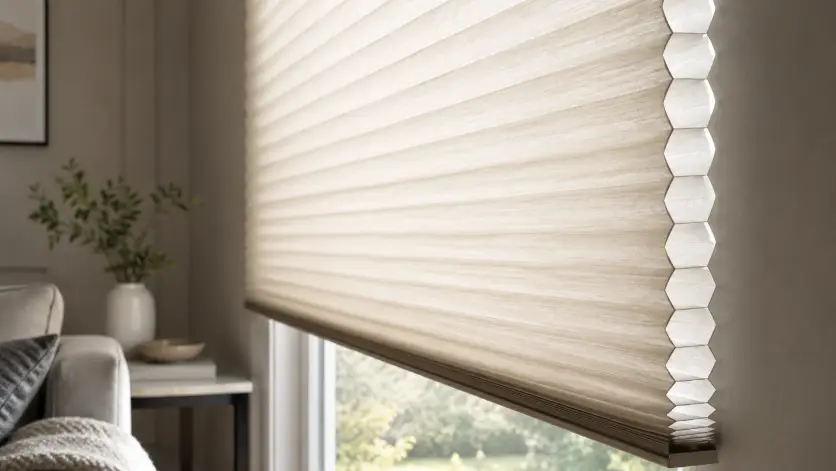
Pleated fabric folded into hexagonal cells that trap a layer of air against the glass. That trapped air is the whole point: honeycomb shades are the strongest insulator on this list, which matters if your windows are single-glazed or your heating bill is the reason you are reading this. Double-cell versions insulate more than single-cell.
- Strengths: genuine thermal and acoustic benefit, very clean look, available in blackout for bedrooms.
- Weaknesses: higher cost, fabric can stain, no tilt adjustment — light is controlled only by height.
- Worth knowing: top-down/bottom-up versions let you pull the shade down from the top, keeping the lower half covered for privacy while daylight still comes in above. Ideal for street-facing bedrooms.
3. Roller Shades
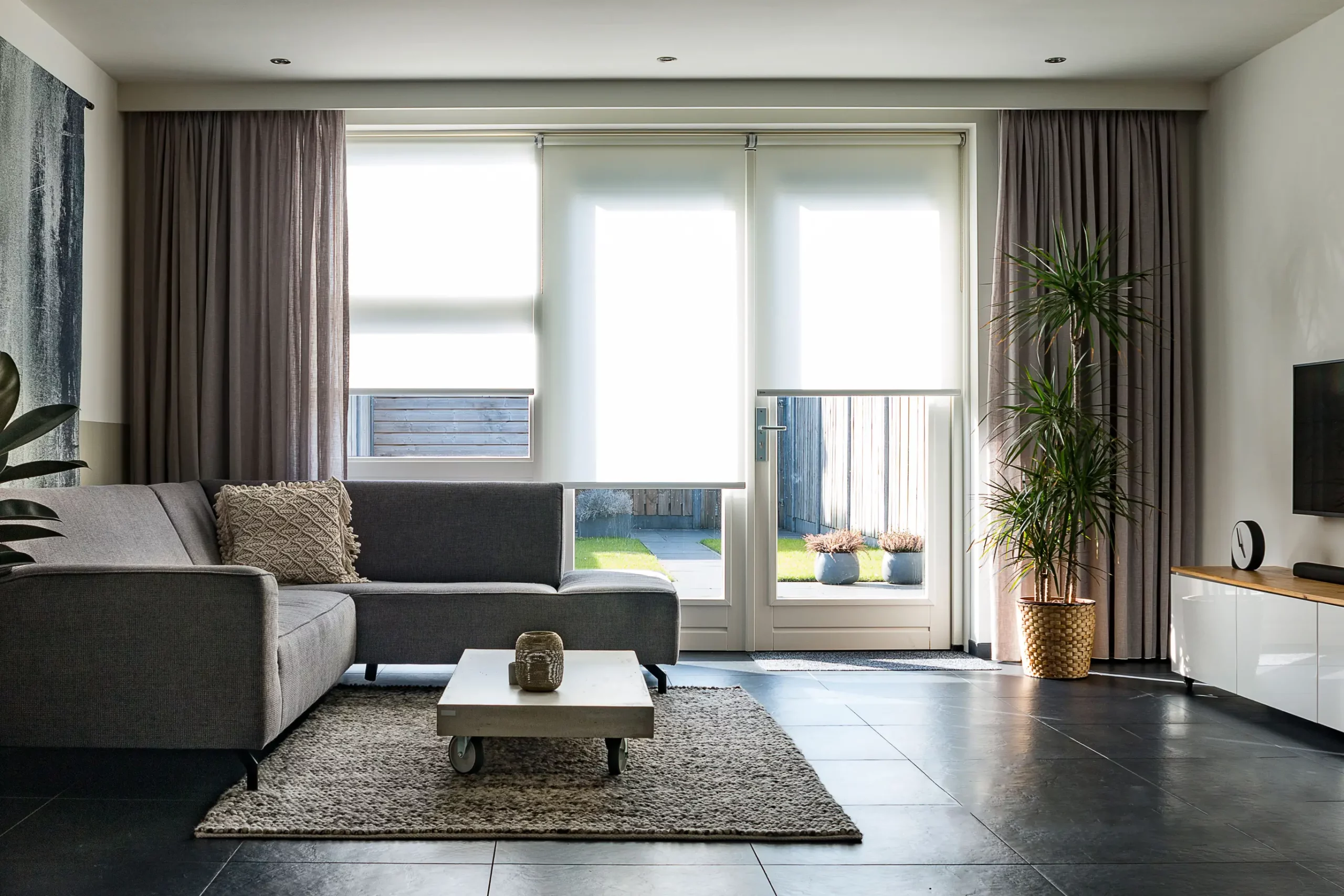
A single flat panel that rolls onto a tube. The simplest, cheapest and least visually intrusive option — when raised, it almost disappears. Fabric opacity does all the work here, from sheer solar screens that cut glare while keeping the view, to full blackout.
- Strengths: minimal, inexpensive, easy to wipe clean, excellent in tight spaces like kitchens and bathrooms.
- Weaknesses: all-or-nothing coverage; a flat panel can look austere on its own; light gaps at the sides on inside mounts.
- Styling tip: pair a roller shade with a soft side panel to soften the hard edge without losing the function.
4. Sheer Curtains
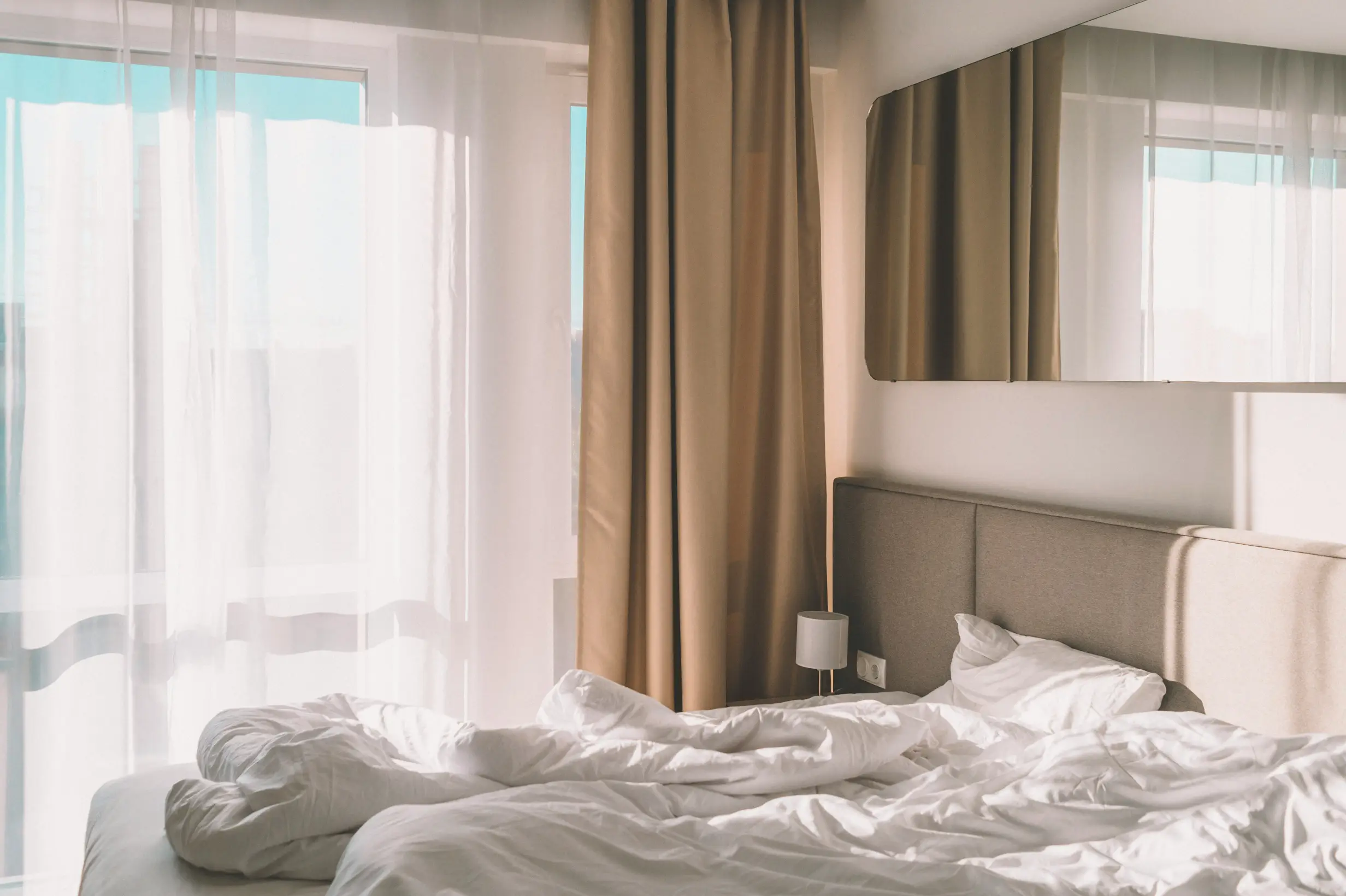
Technically still a curtain, but a completely different proposition from heavy drapery. Sheers diffuse harsh sunlight into a soft glow and blur the view in from outside during daylight — while doing essentially nothing after dark, when interior lighting makes them transparent from the street.
- Strengths: the softest light quality of any option, adds movement and drape, very affordable.
- Weaknesses: no night-time privacy, no insulation, no real light blocking.
- Best use: as the soft layer over a functional one. Sheers plus a blackout roller shade is the most flexible combination for a bedroom.
5. Roman Shades
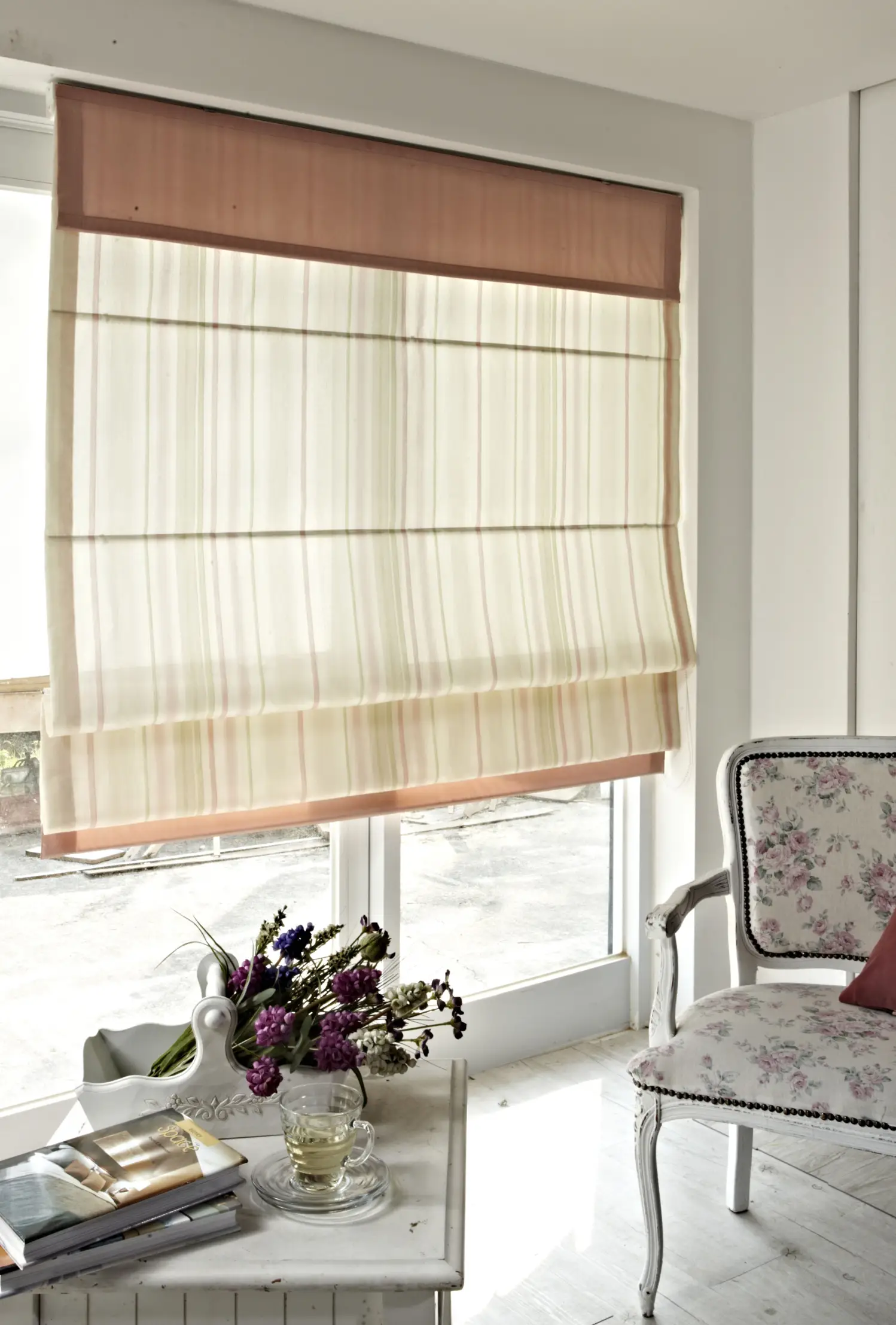
Fabric that folds into neat horizontal pleats as it rises. Roman shades give you the softness of textile with the tidy footprint of a shade — the compromise many people are actually looking for when they say they want to get rid of their curtains.
- Strengths: tailored and warm at once, huge range of fabrics, can be lined for blackout or insulation.
- Weaknesses: the stacked folds sit over the top of the glass even when fully raised, costing you some light; dry-clean only in many cases.
- Visual effect: reads more formal than a roller shade, less fussy than full drapery.
6. Woven Wood and Bamboo Shades
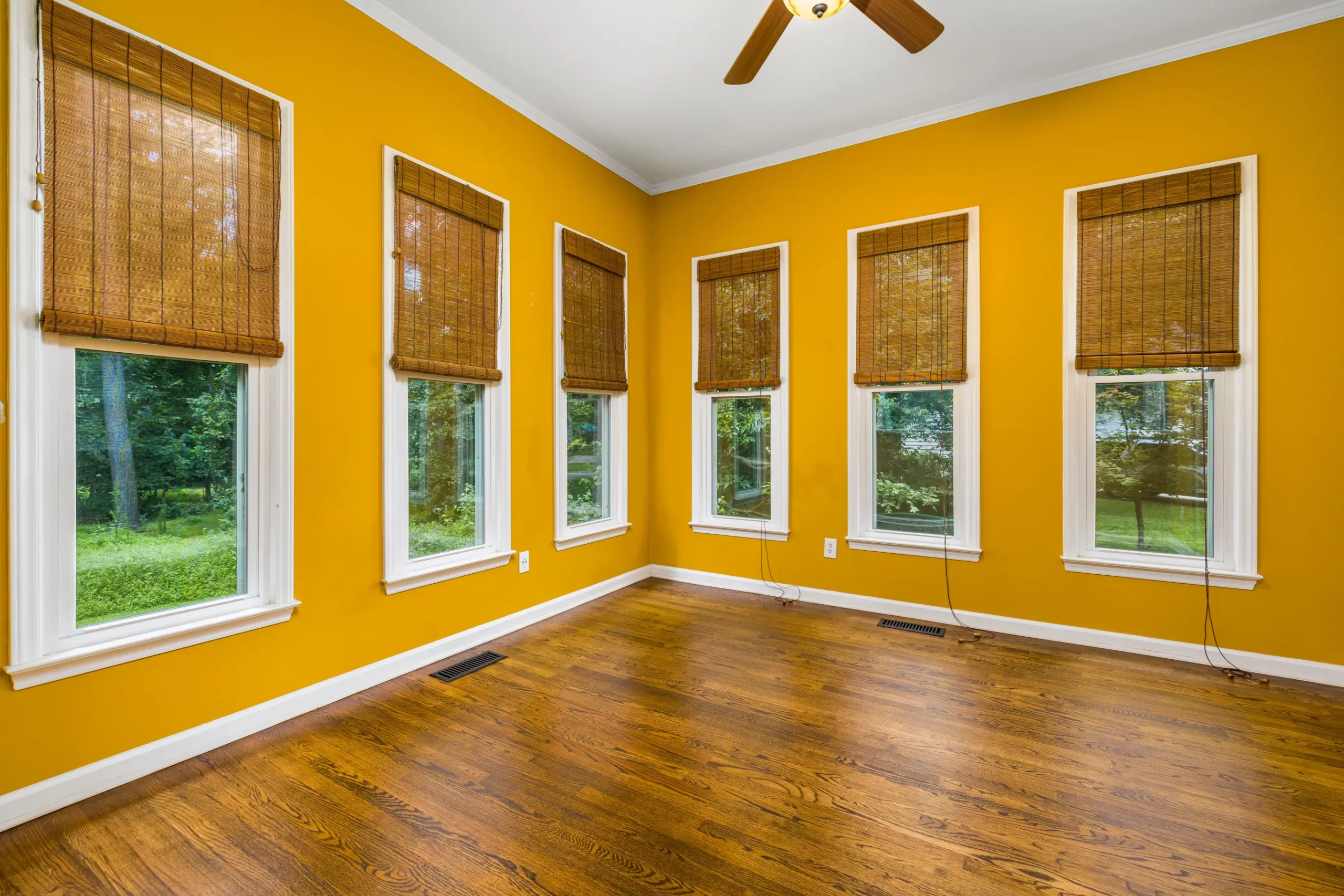
Reeds, grasses and bamboo woven into a panel that rolls or folds up. The light that comes through is dappled and warm rather than evenly diffused, and the irregular weave adds the kind of organic texture that flat painted walls tend to lack.
- Strengths: strong natural character, warms up minimal and neutral interiors, generally affordable.
- Weaknesses: the open weave leaks light and limits privacy unless you add a liner; not ideal for humid bathrooms.
- Best for: sunrooms, coastal and Japandi-leaning rooms, and anywhere you want the treatment itself to be part of the texture story.
7. Interior Shutters
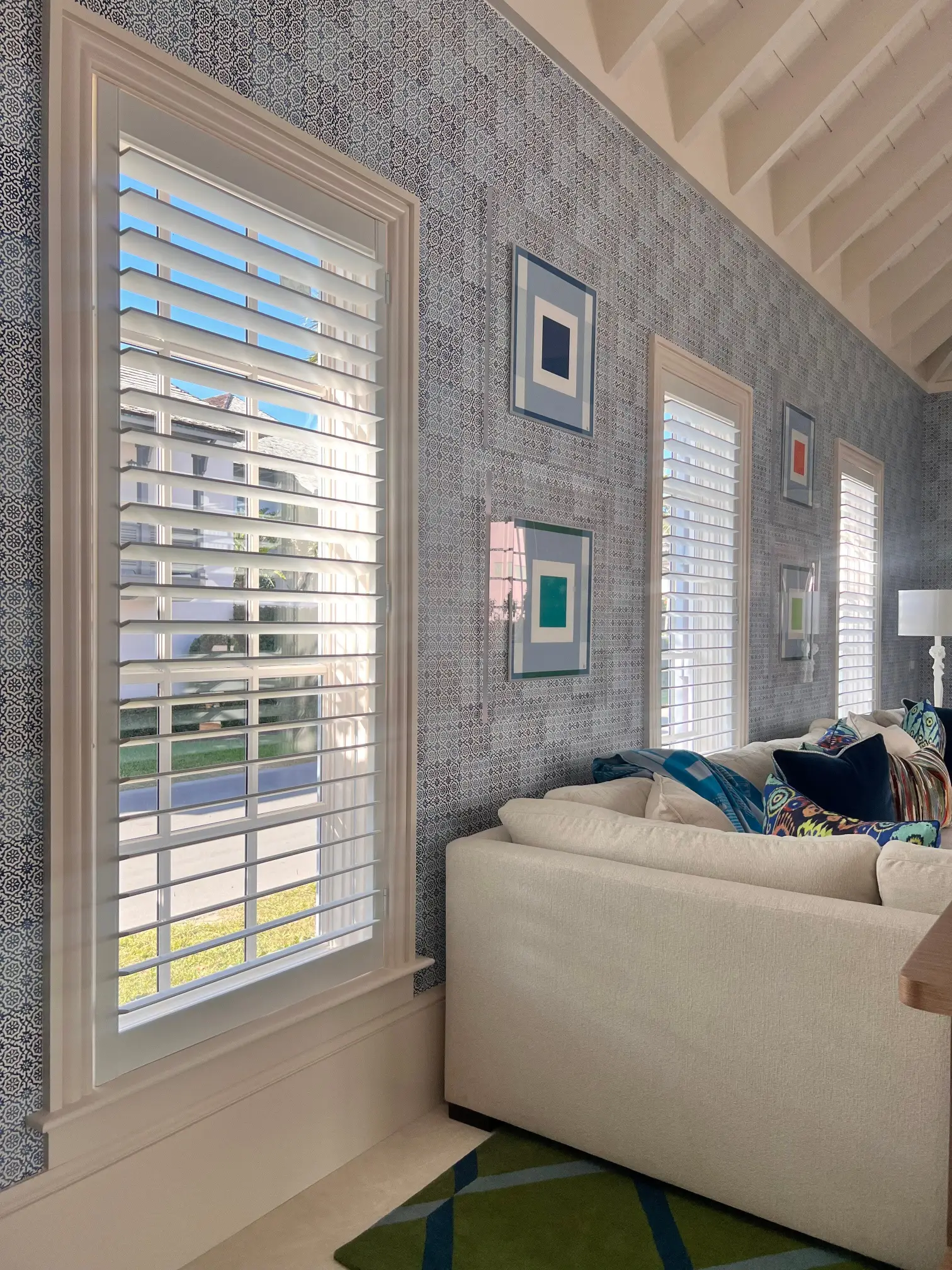
Hinged panels of tiltable louvres fixed to the window frame. The most permanent and most expensive option here, and the only one that reads as architecture rather than decoration. Shutters give near-total privacy with the louvres closed and full control with them open.
- Strengths: extremely durable, easy to clean, adds resale appeal, excellent privacy and light control.
- Weaknesses: high cost, usually requires professional measuring and fitting, difficult to change your mind about.
- Best for: street-level and front-facing windows in a home you plan to stay in.
How to Choose: Start With the Problem
Rather than starting with the look, name the problem the window is causing and work back from there.
- The room is cold or the bills are high → honeycomb shades, ideally double-cell.
- Glare on a screen or a sofa → Venetian blinds or a solar-screen roller shade.
- Neighbours can see in at night → shutters, blackout roller shades, or top-down/bottom-up honeycomb. Sheers alone will not solve this.
- The room feels hard and unwelcoming → Roman shades, woven wood, or sheers layered over an existing shade.
- Renting, or on a budget → roller shades and sheers, both of which are inexpensive and easy to reverse.
Layering Beats Choosing
No single treatment does everything well. A hard treatment handles the function — blocking, insulating, controlling glare — while a soft layer handles the feeling. Honeycomb shades under linen sheers, or a blackout roller behind a woven wood shade, will outperform any one option on its own, and it lets you dial the room in through the day rather than committing to one setting.
Before You Buy
- Measure twice, and decide on the mount first. Inside mounts look neat but leave light gaps; outside mounts block more light and make the window look larger.
- Check the window depth before ordering an inside mount — shallow frames will not take the headrail.
- Choose cordless if there are children or pets in the home. Corded blinds are a known strangulation hazard.
- Order a fabric sample. Opacity and colour both shift dramatically once daylight is behind them.