What Is Cottagecore?
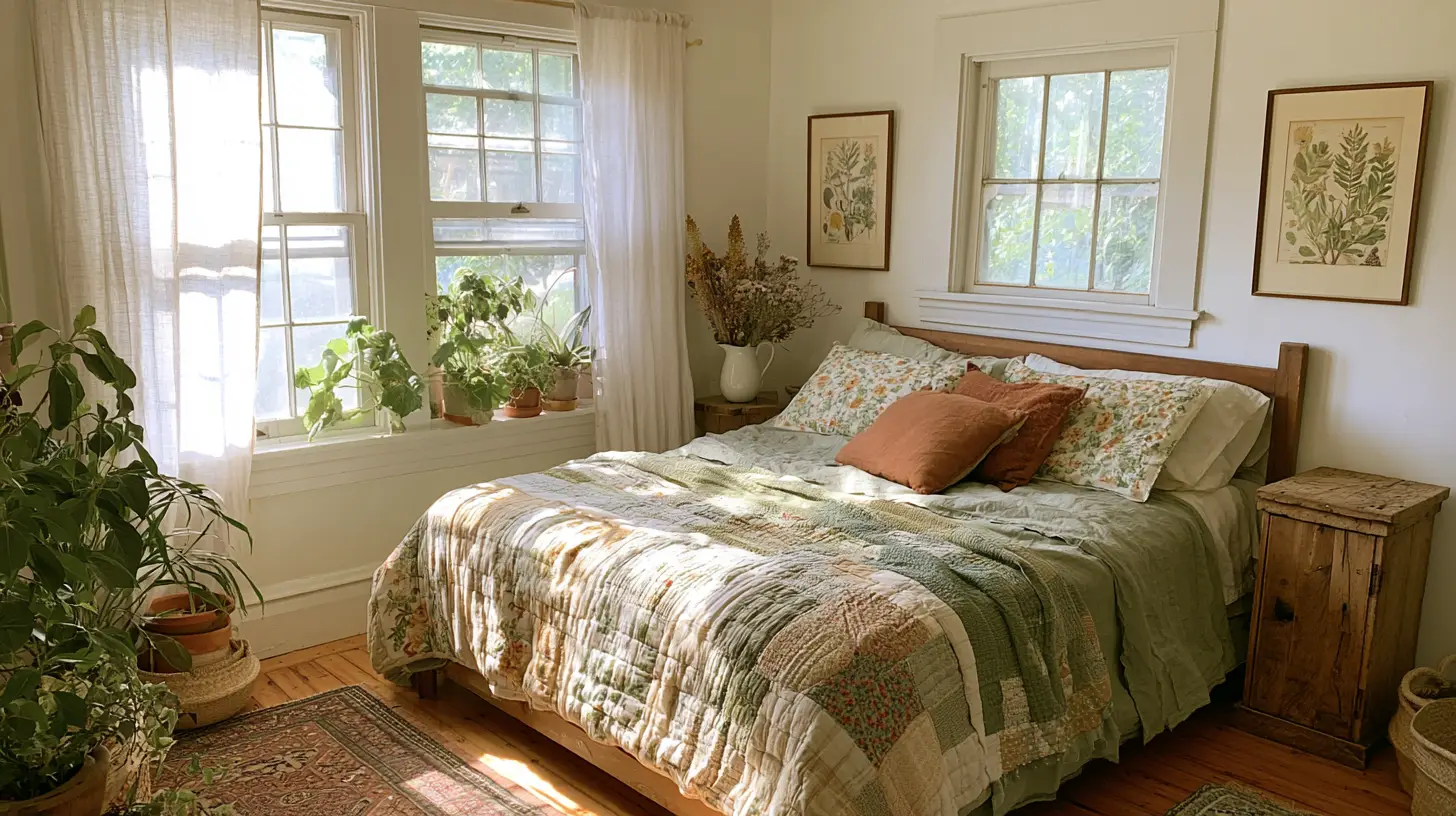
A cottagecore room takes the romance of rural, simple living — think country cottages, wildflower meadows, home baking, and slow mornings — and turns it into a space you can actually live in. It’s warm, nostalgic, and a little imperfect, celebrating handmade things, natural materials, and nature brought indoors.
To recreate that storybook feeling at home, you only need to layer a few key ingredients:
- Earthy color — soft sage, cream, and warm terracotta drawn from nature.
- Natural materials — wood, linen, cotton, rattan, and clay.
- Botanicals — florals, dried flowers, pressed leaves, and real plants.
- Vintage & handmade — thrifted, worn-in, and lovingly imperfect pieces.
Keep these in mind and every choice below becomes easy. Let’s build your cottagecore room one cozy layer at a time.
1. Color: Start With Sage, Cream, and Warm Earth Tones
The foundation of any cottagecore room is a soft, nature-drawn palette. Think antique cream, sage green, warm terracotta, wheat, and honeyed wood. These are the colors of a sunlit meadow and a well-loved farmhouse kitchen — muted, warm, and never harsh.
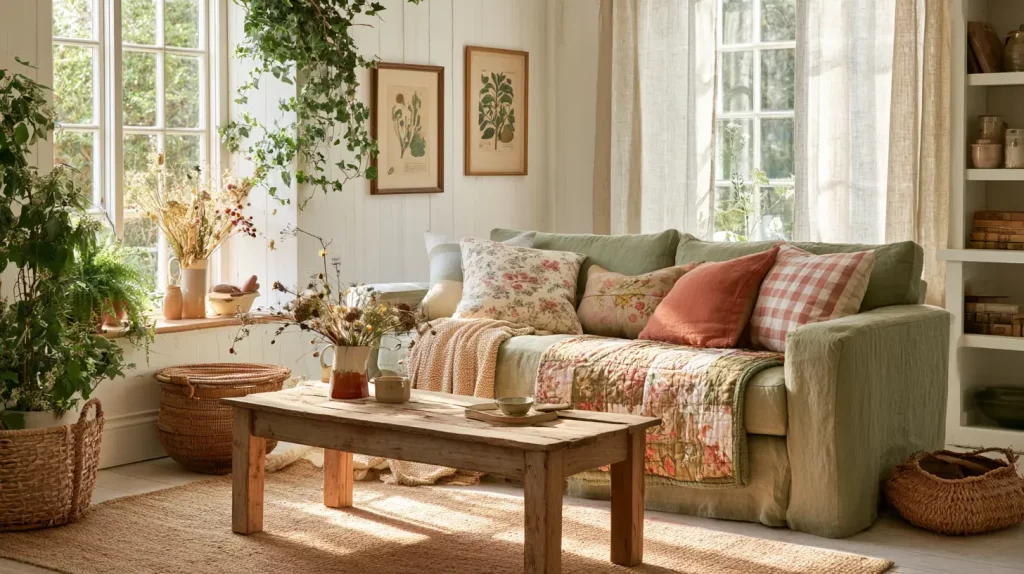
Use cream or soft white on the walls and largest surfaces, bring in sage green through textiles or a painted piece of furniture, and add warmth with terracotta and natural wood. If you can’t paint, a sage throw, a wheat-toned rug, and a few clay pots are enough to set the mood.
Watch out for: cool greys and stark bright white. Cottagecore lives on warmth, so lean into creamy, sun-faded tones instead.
Cottagecore Color Palette: Sage & Warm Earth
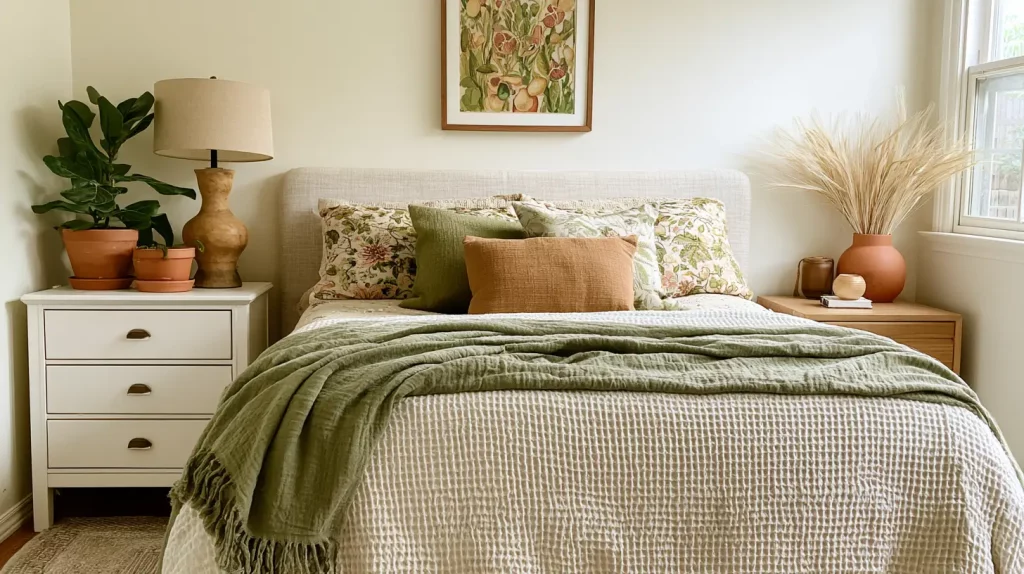
Here’s a ready-made cottagecore palette to build your room around — earthy, warm, and straight from the countryside. Click any hex code to copy it.
Cream and wheat keep the room light and airy, sage brings the garden indoors, and terracotta and deep olive add cozy, grounding warmth. Best for a bedroom, reading nook, or a sunny kitchen corner.
| Role | Color | HEX |
|---|---|---|
| Base | Antique Cream | |
| Main | Sage Green | |
| Secondary | Terracotta | |
| Supporting | Wheat | |
| Anchor | Deep Olive |
Want more than one option? See our 10 cottagecore color palettes inspired by an English garden — soft rose, lavender and wisteria schemes, each with copy-and-paste hex codes and the rooms they suit.
2. Natural Materials: Wood, Linen, and Woven Textures
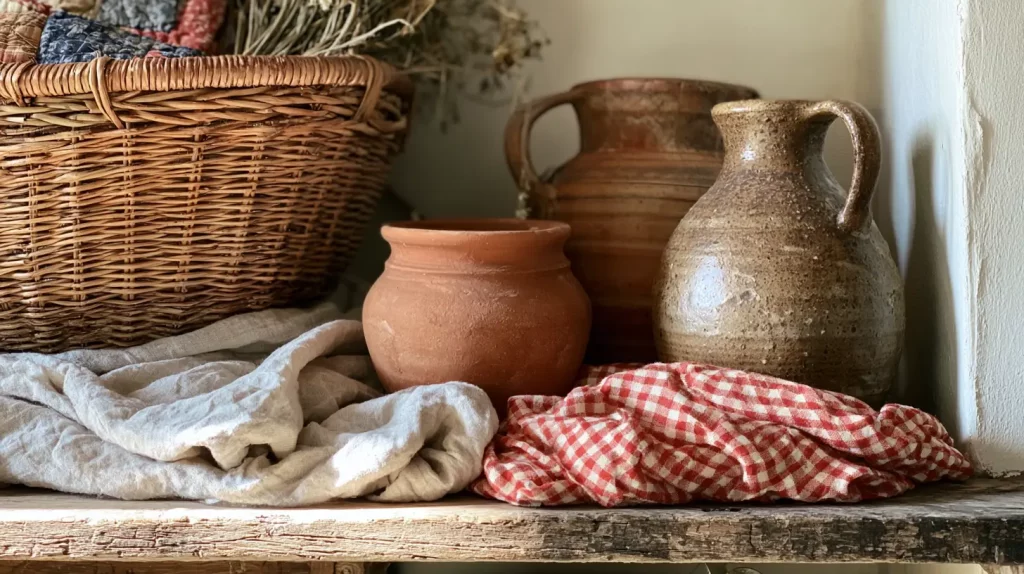
Cottagecore is tactile. Cottagecore feels grounded and handmade. Layer natural, earthy materials wherever you can:
- Wood — a worn wooden nightstand, a rustic shelf, or exposed beams if you have them.
- Linen and cotton — rumpled bedding, gingham or floral prints, and a patchwork quilt.
- Woven fibers — rattan baskets, a jute rug, and wicker storage.
- Clay and stone — terracotta pots, stoneware mugs, and ceramic vases.
Watch out for: shiny plastic, chrome, and high-gloss finishes. Cottagecore wants matte, natural, and slightly imperfect surfaces that feel made by hand.
3. Botanical & Floral Motifs: Bring the Meadow Indoors
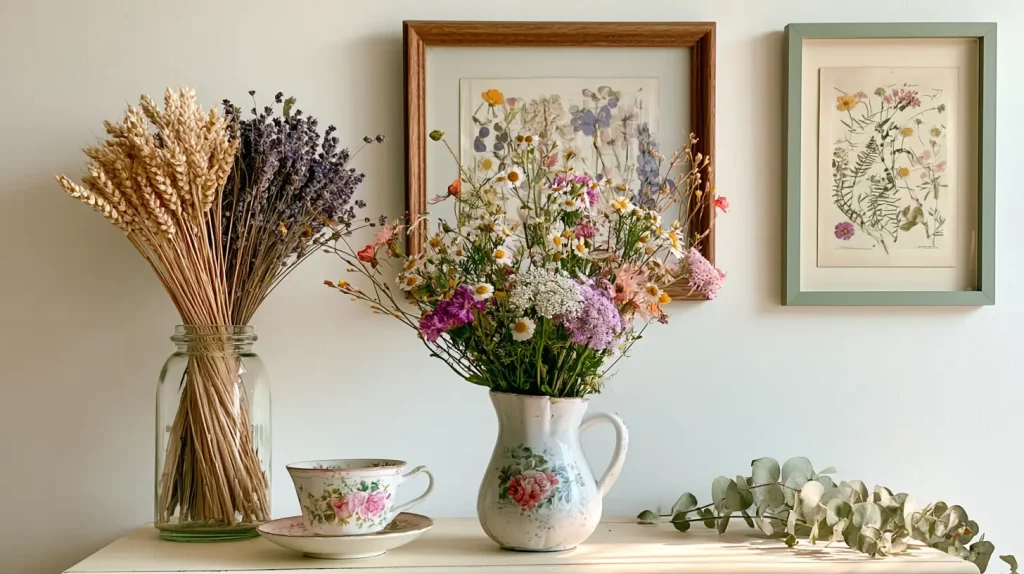
Florals are the heart of cottagecore. Nothing says “country cottage” faster than flowers and foliage repeated across the room:
- Floral prints on bedding, curtains, cushions, or wallpaper.
- Dried flowers — lavender bunches, wheat, and eucalyptus in a jug.
- Pressed flowers or botanical prints framed on the wall.
- Fresh wildflowers in a mismatched vase or an old glass bottle.
Mix flower types and don’t over-arrange them — a slightly wild, just-picked look is more cottagecore than a perfect florist’s bouquet.
4. Vintage & Handmade Finds: Layer in Character
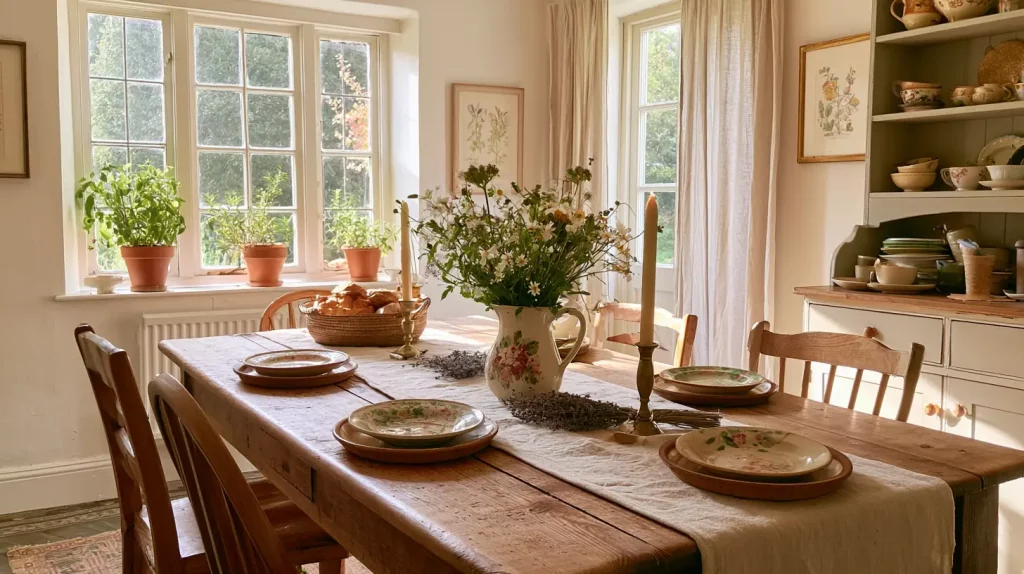
A cottagecore room should look collected over time, not bought in one trip. Vintage and handmade pieces give it soul:
- Thrifted furniture with a little patina — a painted dresser or a spindle chair.
- Old crockery and teacups displayed on open shelves.
- Crochet, lace, and embroidery — a doily, a granny-square throw, a sampler.
- Stacks of well-worn books and a vintage picture frame or two.
Shop secondhand shops, flea markets, and your family’s attic. Imperfections and signs of age are a feature here, not a flaw.
5. Bring Nature Indoors: Plants and Greenery
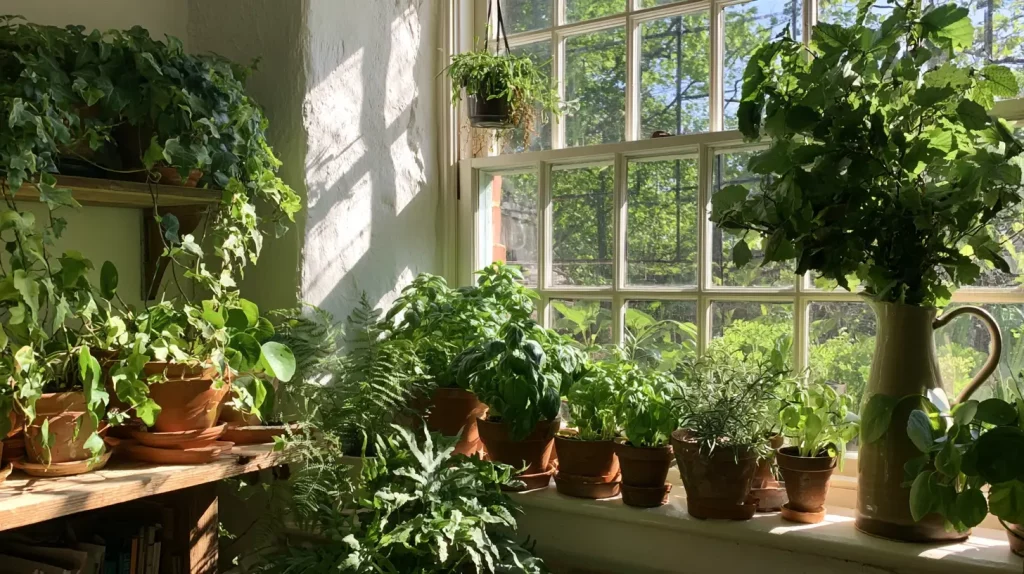
Living greenery is what makes a cottagecore room feel alive rather than staged. You don’t need a greenhouse — just scatter a little nature around:
- Potted plants in terracotta or ceramic — trailing ivy, ferns, or a leafy pothos.
- A windowsill herb garden — basil, mint, or rosemary in little pots.
- Hanging plants to add greenery at eye level.
- Foraged branches or seasonal foliage in a tall jug.
Group plants in odd numbers and vary the heights for a natural, garden-gathered look.
6. Lighting: Keep It Warm and Candlelit
Cottagecore lighting mimics candle glow and golden afternoon sun. Skip cool, bright overhead light and layer in soft, warm sources instead. Use warm-white (around 2700K) bulbs in a few lamps rather than one harsh ceiling light.
Add real or flameless candles, a lantern, and sheer linen curtains that let daylight filter in softly. The goal is a room that feels like late afternoon in a sunlit cottage — warm, gentle, and glowing.
7. Cozy Finishing Touches: Make It Feel Lived-In
The final layer is the everyday coziness that makes cottagecore feel like home. These small touches turn a pretty room into a warm one:
- A patchwork quilt or knitted throw folded over the bed or a chair.
- A reading nook with a soft cushion and a stack of books.
- Homey scents — beeswax, lavender, or fresh bread from a candle.
- Little handmade details — a jar of dried herbs, a bowl of fruit, a bread board.
Let the room feel a little undone. A slightly rumpled quilt and a half-read book say “home” far better than perfect styling.
Where to Start: A Simple, Budget-Friendly Order
If you’re not sure where to begin, build up in this order so each step stays affordable:
- Start with plants and flowers: a few potted plants and a jug of dried flowers instantly shift the mood.
- Then textiles: swap in floral or linen bedding, a quilt, and a woven rug.
- Finally, hunt vintage: add thrifted wood furniture, crockery, and framed botanicals over time.
You can stop at any stage and still have a room that feels distinctly cottagecore.
Cottagecore’s Sister Aesthetics to Borrow From
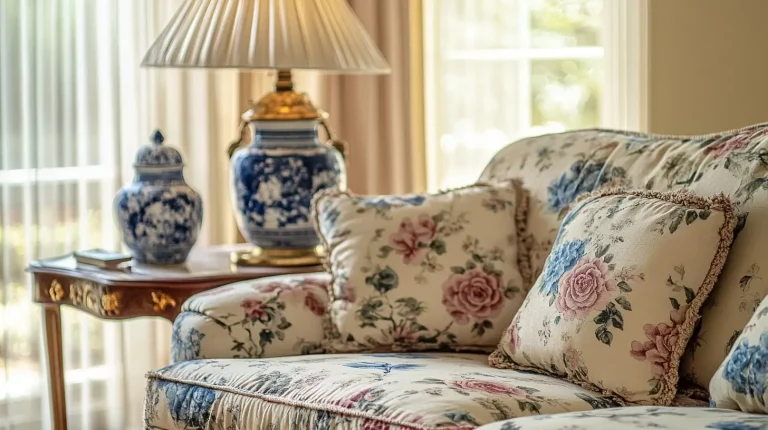
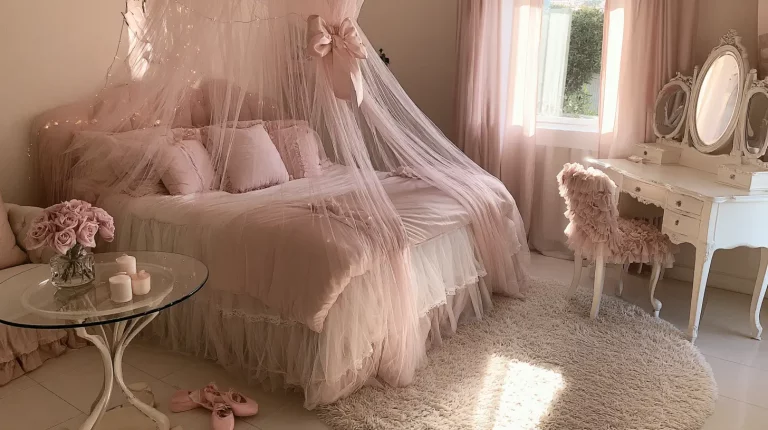
If you love cottagecore, you’ll likely enjoy blending in a few neighboring styles. Farmhouse shares the rustic wood and warmth; grandmillennial adds chintz florals and vintage china; balletcore and coquette bring a softer, more romantic femininity. Borrowing a detail or two keeps your room personal rather than themed.
If you’re still deciding on colors, browse our full set of cottagecore garden palettes with hex codes before you paint.
Final Thoughts: Your Cottagecore Room, One Layer at a Time
Building a cottagecore room comes down to a few gentle choices: an earthy sage-and-cream palette, natural materials, florals and greenery, and vintage pieces with a little history — all lit by warm, candle-soft light. Start with a jug of wildflowers and a linen quilt, and let the room grow cozier from there.
| Element | Do this |
|---|---|
| Color | Sage, cream + warm terracotta |
| Materials | Wood, linen, rattan, clay |
| Motif | Florals, dried flowers, botanicals |
| Nature | Potted plants & foraged greenery |
| Lighting | Warm 2700K, candles & lamps |
| Start with | Plants, flowers, and a quilt |