1. Start With a Warm, Muted Color Palette
Japandi lives and dies on its colors. The whole style is a conversation between Japanese restraint and Scandinavian warmth, and the palette is where that conversation begins. Think soft, grounded neutrals — warm white, oatmeal, greige, clay, and muted sage — layered against deeper anchors like charcoal, walnut, or ink black. The trick is warmth: where a purely Scandinavian room leans cool and bright, Japandi pulls everything a few degrees toward earth so the space feels calm rather than clinical.
- Choose one warm neutral as your base and let it cover roughly 60% of the room — walls, large rugs, main upholstery.
- Add a secondary tone (a soft taupe or muted green) for about 30% — a sofa, curtains, or bedding.
- Ground everything with one deep accent — charcoal cushions, a black-framed mirror, a dark wood stool — used sparingly, around 10%.
If you want the exact combinations to copy, we put together a full guide on how to build a Japandi color palette, complete with ready-made schemes and hex codes you can paste straight into your moodboard.
Watch out for: stark, blue-toned whites and cool greys. They read as modern-Scandi, not Japandi, and instantly drain the warmth out of the room.
2. Choose Low, Natural-Wood Furniture
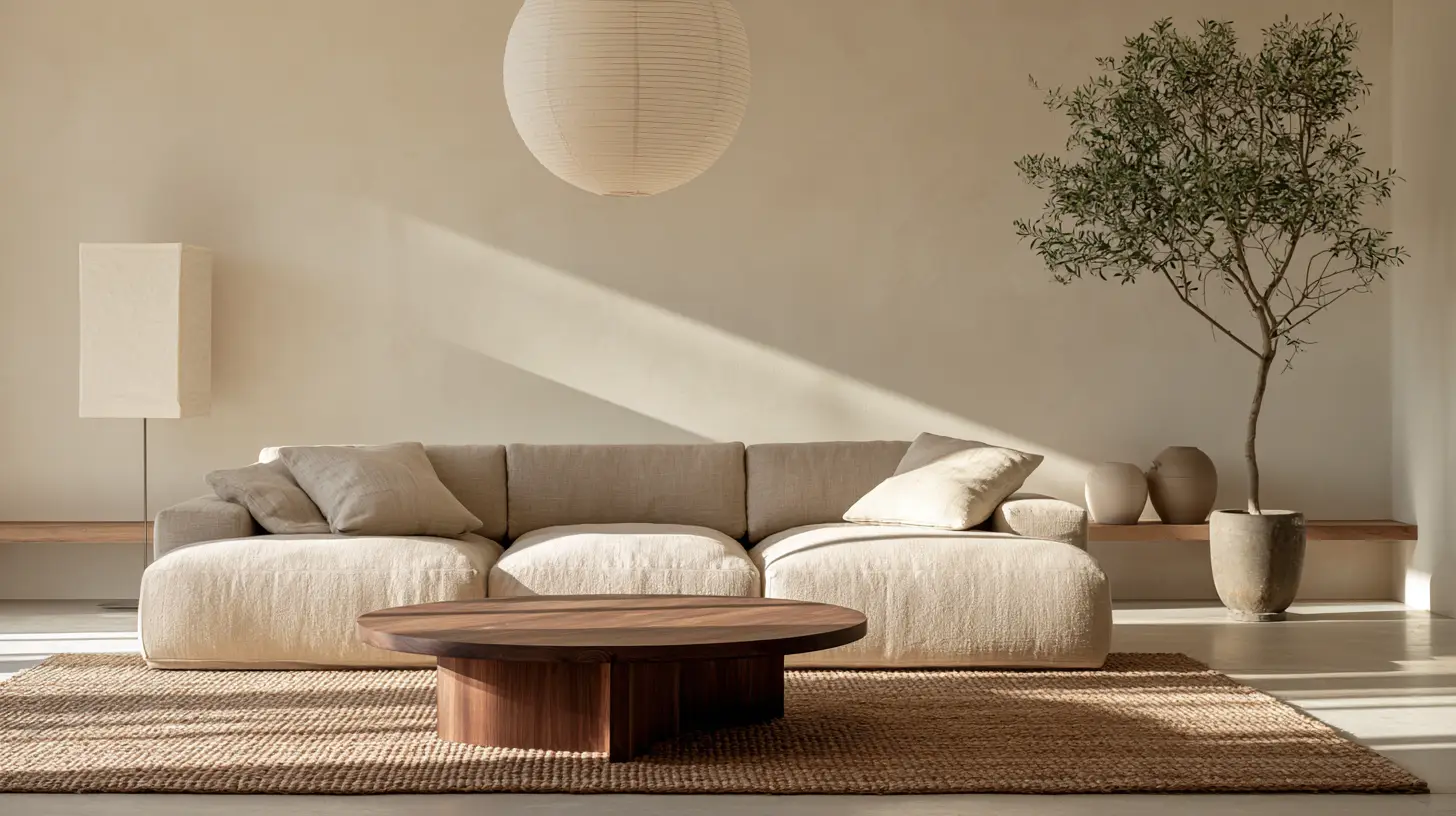
Furniture is where the two design traditions physically meet. From Japan comes a preference for low, floor-hugging pieces and clean joinery; from Scandinavia comes soft, functional silhouettes and pale, honest wood. Together they create a room that feels quietly rooted — nothing bulky, nothing floating, everything sitting close to the ground.
- Look for low-profile sofas, platform beds, and short-legged coffee tables that keep the sightline calm and horizontal.
- Favor solid wood in warm-to-mid tones — oak, ash, walnut — over glossy laminate or cool grey finishes.
- Mix a lighter Scandinavian wood with one darker Japanese-inspired piece so the palette has depth.
- Choose quality over quantity: a few well-made pieces beat a room crowded with filler furniture.
Watch out for: tall, heavy, ornate furniture. Japandi wants breathing room around every piece, so scale down before you scale up.
3. Layer Natural Materials and Texture
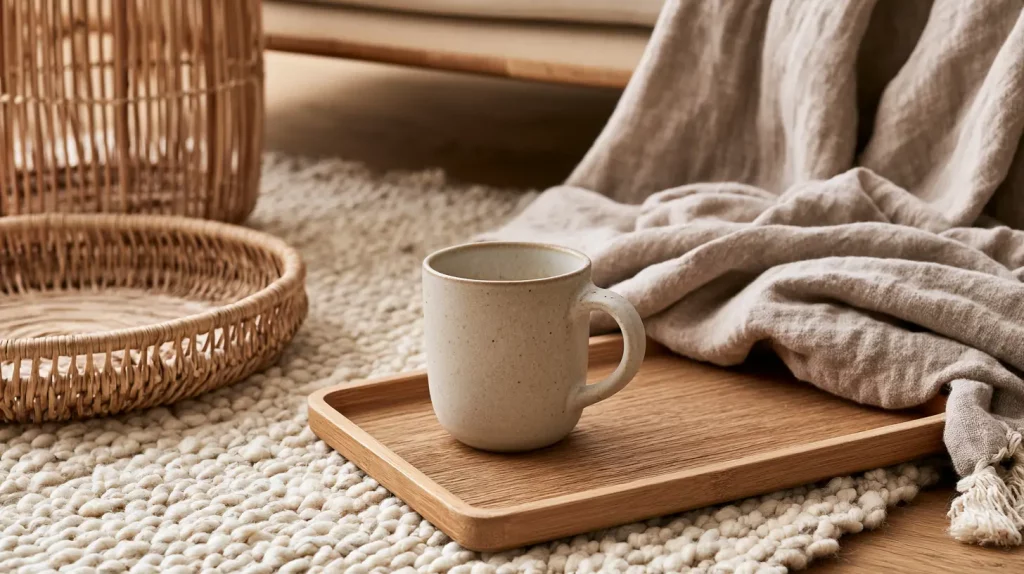
Because the palette is so restrained, texture does the heavy lifting in a Japandi room. This is a style built almost entirely from natural, tactile materials — the kind that age well and feel good under the hand. Layering them is what stops a minimal room from feeling empty or cold.
- Wood — the backbone: floors, furniture, shelving, and small objects.
- Linen and cotton — relaxed, breathable textiles for bedding, curtains, and cushions.
- Rattan, bamboo, and paper — light, airy accents in lampshades, screens, and baskets.
- Clay, stone, and ceramic — matte, handmade weight in vases, bowls, and tableware.
Aim for matte finishes over shiny ones. A rough linen throw, a nubby wool rug, and a hand-thrown ceramic mug sitting together create the quiet richness that makes Japandi feel expensive without a single loud color.
4. Declutter and Design the Negative Space
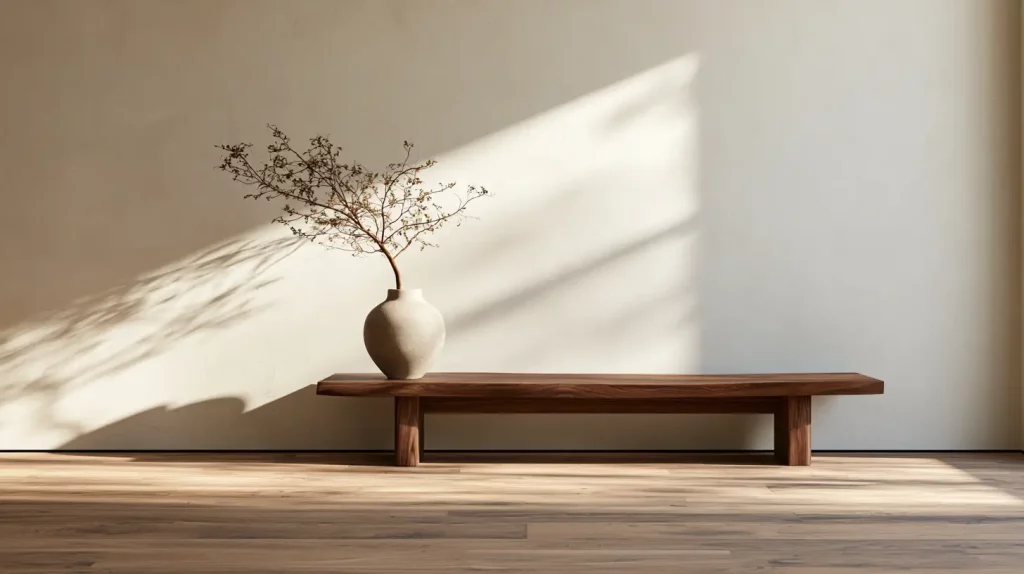
In Japanese design, the empty space around objects — ma — matters as much as the objects themselves. Japandi borrows this idea directly. A clear surface isn’t unfinished; it’s intentional. The goal is a room where every item has room to be seen and nothing competes for your attention.
- Clear your surfaces down to a few chosen objects, then stop — resist the urge to fill the gap.
- Give yourself generous, closed storage so daily clutter disappears from view.
- Leave visual pauses — a bare stretch of wall, an open corner — so the eye can rest.
- Curate with intention: keep what is useful or genuinely loved, and let the rest go.
This is the hardest habit for most people, because it asks you to add nothing. But negative space is the single feature that separates a true Japandi room from a merely tidy one.
5. Layer Soft, Diffused Lighting
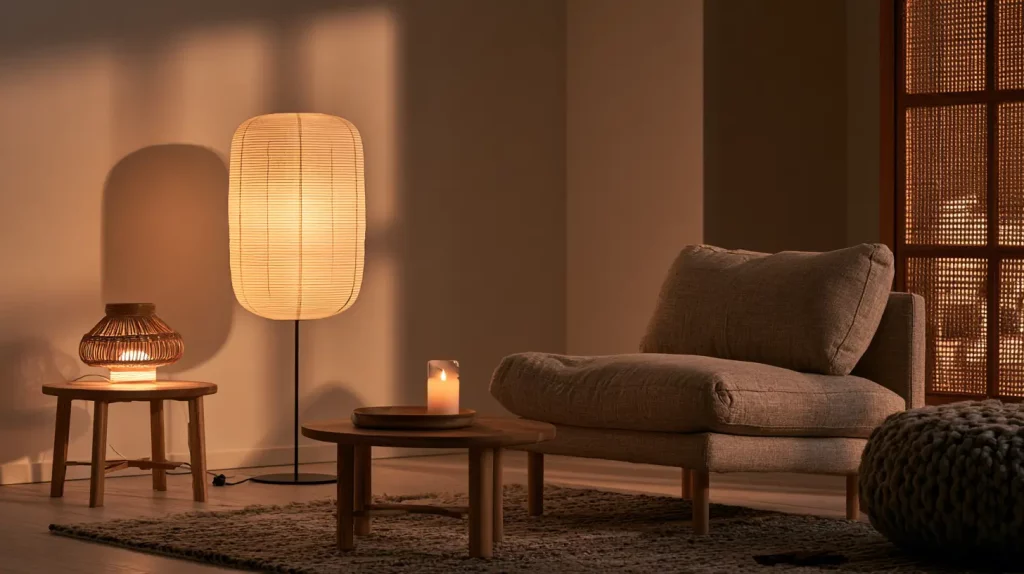
Harsh overhead light is the enemy of calm. Japandi rooms are lit the way a Japanese lantern glows — soft, warm, and diffused, coming from several low sources rather than one bright ceiling fixture. Good lighting is what carries the mood from afternoon into evening.
- Build layers: a gentle main light plus table lamps, floor lamps, and a candle or two.
- Choose warm bulbs around 2700K — never the cool, bluish daylight tones.
- Diffuse the source with paper, rattan, or fabric shades so nothing glares.
- Put lamps on dimmers so the room can soften as the day winds down.
A single warm-glowing paper lantern or a sculptural wood-and-linen lamp can define the entire atmosphere of a Japandi space — it’s worth investing in one piece you love.
6. Add Greenery and Organic Shapes
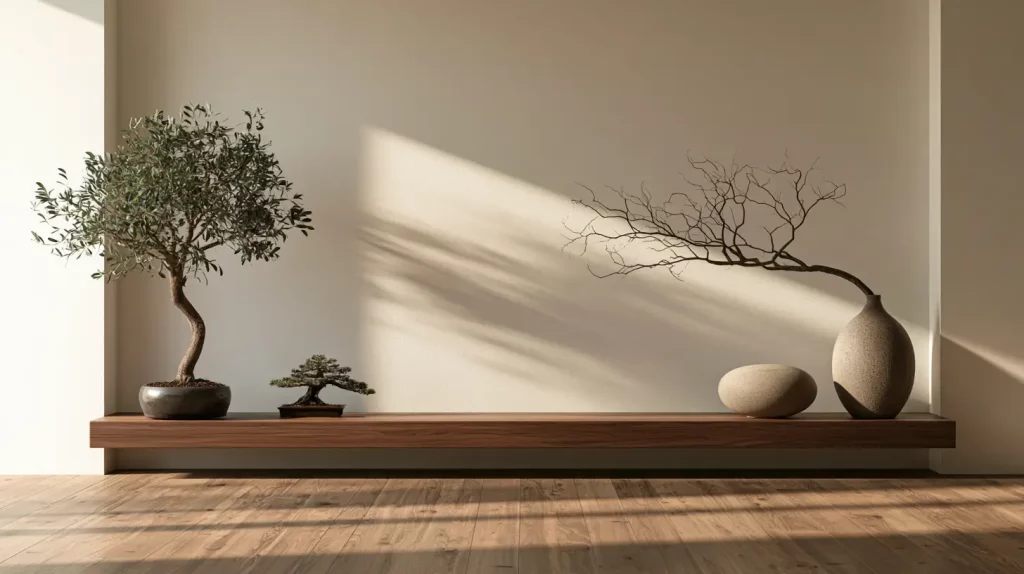
Nature is the third partner in Japandi, alongside Japan and Scandinavia. But where some styles pile on lush jungle plants, Japandi keeps it sparse and sculptural — a single branch, a small bonsai, one well-placed tree. The greenery should feel like a considered gesture, not a garden.
- Choose one statement plant — an olive tree, a fiddle-leaf fig, or a simple potted palm — as a quiet focal point.
- Use a single dramatic branch in a tall ceramic vase for an instant, low-maintenance accent.
- Try a small bonsai or a shallow bowl of moss for an unmistakably Japanese note.
- Keep planters simple — matte clay, stone, or undyed ceramic — so the plant stays the star.
Organic shapes echo this beyond the plants themselves: a curved stool, a rounded pebble-like vase, or the irregular edge of a handmade bowl all soften the room’s clean lines.
7. Finish With Handmade, Imperfect Details
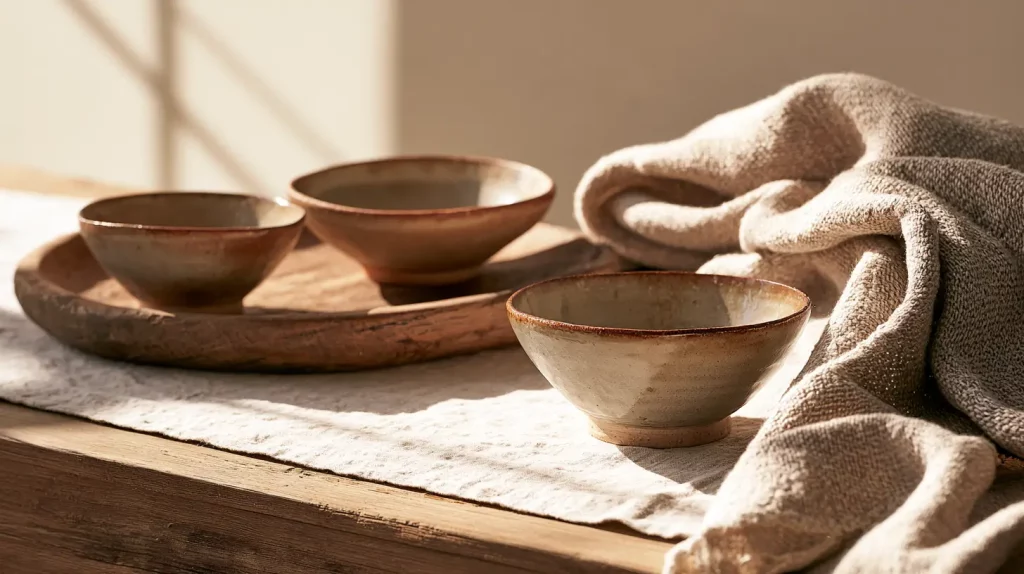
The soul of Japandi is wabi-sabi — the Japanese appreciation of beauty in imperfection and age. This is the finishing layer that makes a room feel personal and lived-in rather than showroom-perfect. Machine-made uniformity is exactly what you want to avoid here.
- Choose hand-thrown ceramics with visible glaze pooling and slightly uneven rims.
- Display objects with honest signs of age — a weathered wood tray, a well-worn linen runner.
- Add one or two handmade textiles: a hand-loomed throw or a naturally dyed cushion cover.
- Let a few pieces show their making — a knot, a seam, a brushstroke — instead of hiding it.
The point isn’t to make a room look worn — it’s to welcome the small imperfections that come from things being real, natural, and made by hand. That quiet acceptance is what turns a minimal room into a restful home.
Where to Start: A Simple Japandi Roadmap
You don’t need to redecorate all at once. If you’re building a Japandi room on a budget, work in this order and let it come together over time:
- Declutter first. It costs nothing and delivers the biggest visual change. Clear surfaces and create negative space before you buy a single thing.
- Fix the palette and lighting. Swap in warm 2700K bulbs and introduce your warm-neutral base through paint, bedding, or a rug.
- Invest in a few natural, handmade pieces. One low wood table, a linen throw, a ceramic vase, and a single statement plant will carry the whole look.
Final Thoughts
Japandi isn’t about buying a specific set of things — it’s about balance. It’s the warmth of Scandinavian hygge meeting the calm discipline of Japanese design, held together by natural materials, soft light, and plenty of breathing room. Get the palette warm, keep the furniture low and honest, let empty space do its work, and finish with a few handmade pieces you genuinely love. Do that, and your room won’t just look like Japandi — it will feel like it: quiet, grounded, and effortlessly calm.